4.9/5 | Your Life, Rebuilt
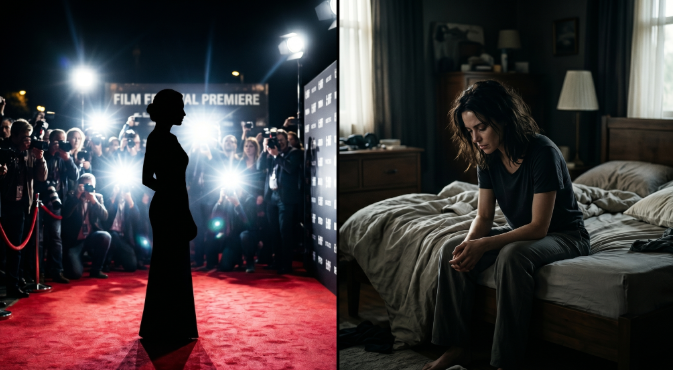
Disability does not care how successful, talented, or well-known someone is. It can interrupt a career at its peak, make ordinary routines exhausting, and turn basic daily tasks into challenges that other people never see. For every celebrity who speaks publicly about their condition, there are countless ordinary people trying to keep up with work, family life, and the demands of the day while managing symptoms that do not stop when the workday begins.
At Share Lawyers, those are the stories that matter most. Many clients come to us after spending months or years trying to push through pain, fatigue, cognitive issues, mobility problems, or mental health symptoms. They are not looking for sympathy. They are looking for support, financial stability, and the ability to focus on their health when they can no longer keep up with work the way they once did.
That is part of why celebrity disability stories can be so powerful. They remind people that disability is not always obvious, not always constant, and not always easy to explain. They also show something else that our clients know all too well: even when someone is talented, motivated, and determined, there can come a point where pushing through is no longer sustainable.
Christina Applegate: trying to work through worsening symptoms
Christina Applegate has spoken candidly about living with multiple sclerosis, a chronic disease that affects the central nervous system. She publicly revealed her diagnosis in 2021 and later shared that her symptoms had likely been developing for some time before that, including tingling, weakness, pain, and mobility issues that became impossible to ignore.
What makes her story especially relatable is not just the diagnosis itself, but the way she describes trying to keep going while her body was changing. During the final season of Dead to Me, Applegate continued filming while struggling with worsening symptoms and later described some days as involving such severe pain that she was “in bed screaming”. She has also spoken openly about depression, isolation, and the emotional toll of realizing that life no longer works the way it used to.
From the outside, people may see a public appearance, an award show, or a brief interview and assume someone is coping well. But Applegate’s honesty makes clear how misleading that can be. A person may be able to show up for one event and still be completely unable to sustain the regular demands of full-time work. That is something many people with episodic or progressive illnesses understand deeply.
This is a pattern we see often. Many clients with MS, chronic pain, neurological illness, or autoimmune conditions do everything they can to stay in the workforce. They keep going through worsening symptoms, hoping treatment will help or that things will stabilize. By the time they stop working or apply for disability benefits, they are often already exhausted and overwhelmed. When insurers focus on isolated moments where someone seemed “fine,” they miss the much bigger picture. Our role is to make sure that full picture is seen.
Michael J. Fox: when determination is not enough

Michael J. Fox has spent decades speaking publicly about Parkinson’s disease and advocacy. Diagnosed in 1991 at age 29, he continued acting for years before eventually becoming one of the most recognized public voices for Parkinson’s research and awareness through the Michael J. Fox Foundation.
His story resonates because it captures something many workers experience with progressive conditions: the desire to keep working for as long as possible. People often hold on because they love their jobs, need the income, or cannot imagine stepping away from the identity they have built through their work. That kind of determination is admirable, but it does not change the reality of a progressive illness.
For many of our clients, one of the hardest parts of becoming disabled is not only the symptoms themselves, but the loss that comes with no longer being able to do the job they once did well. Some try reduced hours. Others use sick days, vacation days, or unpaid leave just to recover enough to return. Some are told they should be able to continue because they managed for a while in the past. But continuing to work for a period of time is not proof that someone is not disabled. Often, it is proof of just how hard they tried before reaching a breaking point.
That is especially important in long-term disability cases. Insurers sometimes treat persistence as evidence that a person should be able to keep going indefinitely. In reality, many illnesses worsen over time, and many people keep working longer than they reasonably should because they are trying to protect their livelihood and their sense of self. Fox’s public journey helps show that there is a real difference between wanting to work and being medically able to sustain work over time.
Millie Bobby Brown: disabilities that affect communication
Not every disability is dramatic or immediately visible. Some affect how people hear, process information, communicate, or participate in environments that were never designed with them in mind.
Millie Bobby Brown has shared that she was born with partial hearing loss in one ear and eventually lost all hearing in that ear. She has spoken about singing and performing without always being able to hear herself properly, something that highlights how a condition can affect day-to-day function even when the person appears highly capable from the outside.
Many disabilities are tied not just to symptoms, but to the demands of the environment. A person with hearing loss may struggle in meetings, on phone calls, or in noisy workplaces. Someone with migraines, vestibular problems, or sensory sensitivities may be unable to tolerate screens, fluorescent lights, or constant stimulation. Others may technically be able to do parts of their job, but only at the cost of extreme fatigue, stress, or worsening symptoms.
That is often missed in LTD claims. Insurers may focus too narrowly on diagnosis and not enough on function. They may ask whether someone can sit, stand, or speak, while ignoring whether the person can actually perform the essential duties of their occupation reliably and consistently. That distinction matters. Disability is not only about whether a person can do something once. It is about whether they can sustain it in the real world, under real workplace conditions, over time.
Leonardo DiCaprio and Daniel Radcliffe: the weight of invisible disability
Some of the most misunderstood disabilities are the ones other people cannot see. Leonardo DiCaprio has spoken about living with obsessive-compulsive disorder, including intrusive rituals and compulsions that affect daily life.
Daniel Radcliffe has also shared that he has dyspraxia, a developmental coordination disorder that affected him growing up and made certain tasks more difficult.
These examples are important because they push back against a common misconception: that disability must be visible to be real. Many people live with mental health conditions, neurodevelopmental disorders, chronic pain, cognitive impairment, or neurological symptoms that are not obvious in a brief interaction. They may look well, speak clearly, or appear composed. That does not mean they are functioning well enough to maintain full-time employment.
This is especially true for clients dealing with depression, anxiety, PTSD, OCD, ADHD, concussion symptoms, or medication side effects. They may struggle with concentration, pace, memory, stress tolerance, motivation, or emotional regulation. They may still be capable, intelligent, and hardworking, but unable to perform reliably and consistently in a demanding job. That gap between appearance and function is often where long-term disability claims are unfairly denied.
These are some of the cases that require the most careful explanation. Insurers sometimes dismiss invisible disabilities as subjective or temporary, or assume the person should simply continue treatment while staying at work. But treatment does not always restore function quickly, and in some cases it does not restore the person to their prior capacity at all. The legal and medical evidence needs to reflect how the condition affects actual job performance, not just whether a diagnosis exists on paper.
From the spotlight to ordinary life

Celebrities live in a different world in many ways. They may have greater financial resources, more schedule flexibility, and more access to private support than most people do. But the stories they share still reveal something true and universal about disability: it can disrupt identity, routine, relationships, and work in ways that outsiders often underestimate.
That is where the connection to Share Lawyers becomes real. Our clients are not attending premieres or speaking to the press. They are trying to figure out how to pay their bills after they can no longer work. They are trying to explain to family members, employers, and insurance companies why they cannot keep going. They are trying to navigate a disability claim while also managing pain, fatigue, depression, brain fog, or fear about the future.
The common thread is not fame. It is the experience of trying to keep up while living with something that makes ordinary life much harder than it looks from the outside.
At Share Lawyers, that is the reality we work with every day. Many clients come to us after being denied or cut off from long-term disability benefits at the very time they need help most. They have already spent months or years pushing themselves. They should not also have to fight an insurance company alone. By gathering the right medical evidence, explaining functional limitations clearly, and challenging unfair denials, our goal is to help real people get the support they need and deserve.
Disability can affect anyone. And when it does, compassion matters, but so does advocacy.
Contact Share Lawyers today and let our experience work for you. Our 40 years of experience can help you win your case against Canada Life, Desjardins, Manulife, RBC Insurance, Sun Life, and other insurance companies. Our legal team offers a free consultation and works on a contingency basis—there are no fees unless you win your case.